Monday, 11 June 2012

Final post


Report


Introduction

I set out to research 5 libraries that were architecturally signifcant and could inspire the viewer to want to enter them. My research has shown that from the five libraries I chose, there were some similar and different charachteristics that were revealed. It is beyond the scope of this report to comment on the obvious limitations imposed by a broad subjective topic and limited data obtained, so I will focus on the key similarities and differences between the library I can discern from my research. They will be building shape and viewer impact, materials used, intention of the architect and use of art.


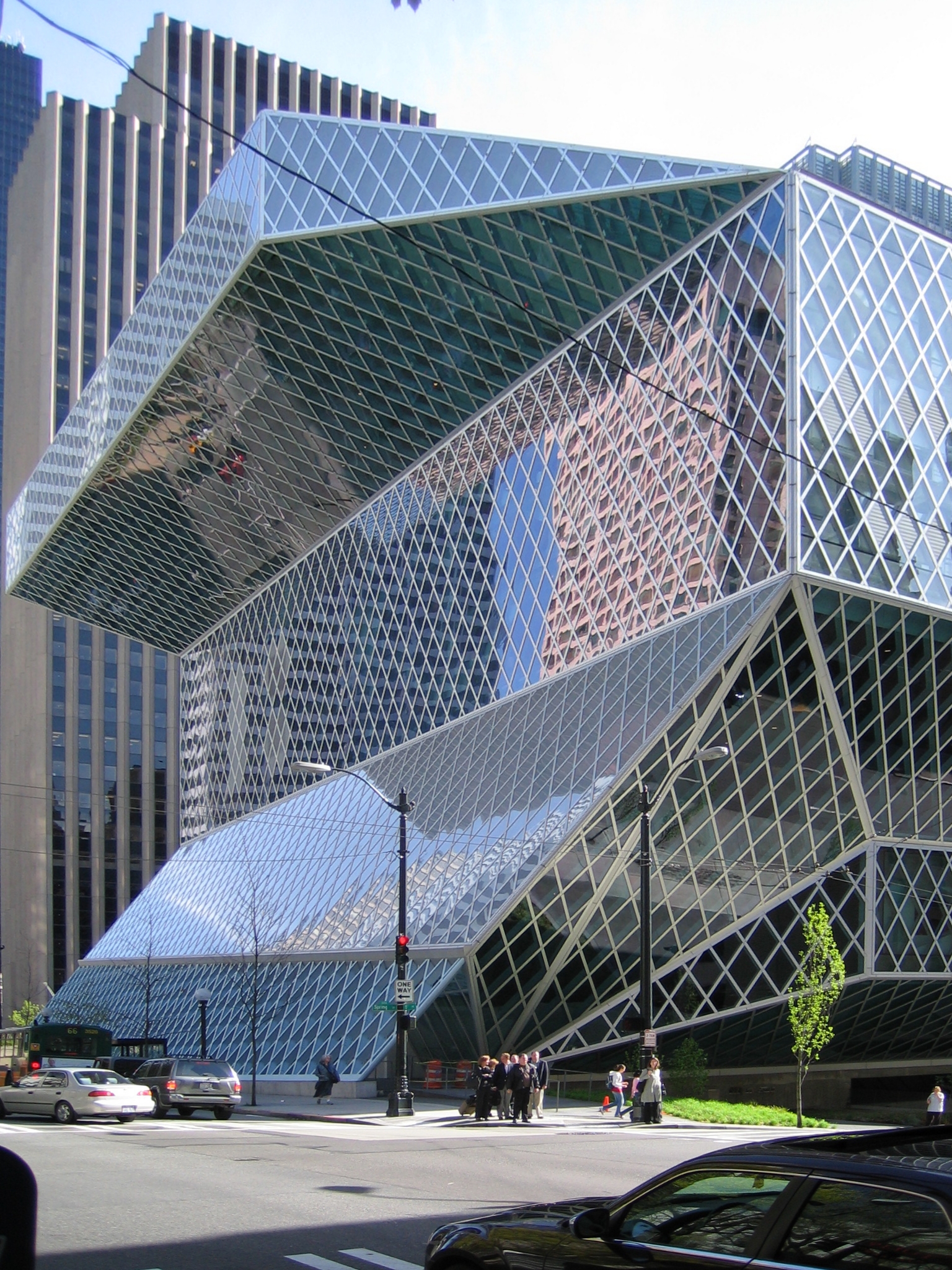
There were differences between the building shapes and how that might impact on a viewer. The Geisel library and the Belarus library both had a roundish non-box like shape, both shaped in way that might draw a viewer's gaze towards the front door. In contrast, the Royal Danish Library and Royal library both were solid rectangular shapes, which might invoke in a viewer a greater sense of stability or permanence. The seatle library as shown here,


File:Seattle Central Library, Seattle, Washington - 20060418.jpg
Seattle Library  (source : Wikipedia)


was a less symetrical shape than the oher buildings, and curiously, my research showed it was the only building that created strong mixed reactions in the public when it opened.


There was a high use of glass in all five libraries I looked at. With the exception of the Giesel library, all other libraries were built in the last 13 years, which may account for the trend in high glass use. Through my research, I found this video of Royal Danish Library (known as the black diamond), which demonstrates well the reflective nature of glass and the visual affects it can create.


             Royal Danish Library - Source: Youtube


The architect's intentions in their building design, was a key area I was interested in researching. Through extensive research, I was able to obtain two of the architects ideas, Fou Futisomo who designed the Musashino Art University Museaum & Library and  Joshua Prince-Ramus a key architect of the Seattle Library. Both architects expressed the idea that they wanted to design a space which people could expand into, that would help people be more creative and connect. I have reproduced Joshua Prince-Ramus's interview below, because it offers a great insight into the mind of an architect.


                                            Joshua Prince-Ramus - Source : TED talks


The use of art to enhance the Library going experience was a key finding in my research. Fou Fujimoto's symbolic use of empty shelving can be seen to be artistic. George Tsutakawa sculpture in front of the Seattle library, Per Kirkeby's fresco in the Royal Danish library and John Baldessari's entrance to the Geisel library (as shown below) are all examples of art used to enhance the library going experience, which my research yielded.


File:Read-Write-Think-Dream Interior, UCSD.JPG
Giesel library entrance :SourceWikimedia


Conclusion
Researching five different libraries from around the world, 2 academic libraries, 2 National libraries and 1 public library, gave findings which would be of interest to anyone considering visiting any of these libraries or perhaps inspired to do so. Through my research, I was able to touch the surface of each of these libraries, in terms of the architect's intentions in some cases, in terms of the visual impact of the building, the use of art to enhance the experience and the types of materials that were used. Hopefully it was a bit thought provoking! 


References:

Arch Daily 2011, Musashino Art University Museum & Library / Sou Fujimoto, Arch Daily, viewed 2 June 2012, http://www.archdaily.com/145789/musashino-art-university-museum-library-sou-fujimoto/ 

College of Art and Design 2012, Musashino University, viewed 2 June 2012, <http://mauml.musabi.ac.jp/>

Gregory, R 2010, '165 Musashino Art University Library. (Sou Fujimoto Architects)', The Architectural Review, vol. 228, no. 228, pp. 42, Gale Cengate, viewed 2 June 2012.

Pollock, N 2011, Musashino Art University Museum & Library, Architectural Record, viewed 2 June 2012, http://archrecord.construction.com/projects/building_types_study/libraries/2011/musashino.asp

Sou Fujimoto 2012, Architects, viewed 2 June 2012, <http://www.sou-fujimoto.net/>

Sou Fujimoto, on designing a library on the age of information 2012, Archdaily, viewed 2 June, <http://vimeo.com/21702196#t=12>

Tanaka, J 2010, Spiral of Life: The Musashino Art University Museum & Library Academia edu, viewed 2 June 2012, http://utokyo.academia.edu/JunTanaka/Papers/373615/Spiral_of_Life_The_Musashino_Art_University_Museum_and_Library

Sullivan, M 2011, 'George Tsutakawa Fountain at the Downtown Seattle Public Library', Councelor@law,v iewed 8 June 2012 <http://www.wac6.com/wac6/2011/06/george-tsutakawa-fountain-at-the-downtown-seattle-public-library.html>
Rahner, M 2008, 'Talking with Rem Koolhaas, the architect behind the Central Library', The Seatle Times, 9 September 2008, viewed 8 June 2012, <http://seattletimes.nwsource.com/html/entertainment/2008167399_remkoolhaas09.html>
 Alessandroi A & De Cindi F 2008, 'Augmented Urban Spaces: Articulating the Physical and Electronic City' Ashgate Publishing, EBL Ebook Library, viewed 8 June 2012.
Seattle public library 2009, Seattle Public Library, 13 March, viewed 8 June 2012, <http://www.youtube.com/watch?v=Lp11MtnWmUo&feature=related>
Carlson LA, Hölscher C, Shipley TF and Dalton RC 2010, 'Getting Lost in Buildings', Current Directions in Psychological Science, vol. 19, no.5, pp. 284-289, SAGE premier, viewed 8 June 2012.
Seattle Central Library 2012, Wikipedia, viewed 8 June 2012, <http://en.wikipedia.org/wiki/Seattle_Central_Library>.
Rem Koolhaas 2012, Wikipedia, viewed 8 June 2012, <http://en.wikipedia.org/wiki/Rem_Koolhaas>.
Joshua Prince-Ramus 2012, Wikipedia, viewed 8 June 2012,<http://en.wikipedia.org/wiki/Joshua_Prince-Ramus>.
Rex ny 2012,Wikipedia, viewed 8 June 2012, <http://www.rex-ny.com/work/seattle-library/>.
Seattle Public Library 2012, Trip advisor,Wikipedia, viewed 8 June 2012, <http://www.tripadvisor.com.au/Attraction_Review-g60878-d558679-Reviews-Seattle_Public_Library-Seattle_Washington.html>
.E-architect, 'Sort Diamand, Copenhagen, Denmark : Information', viewed 8 June 2012, <http://www.e-architect.co.uk/copenhagen/sort_diamant_copenhagen.htm>.
Labalme, C 1999, 'Travel Advisory; A Diamond for Denmark's Library', the new york times, 17 October 1999, Academic Onefile, viewed 9 June 2012.
ArcSpace, 'schmidt hammer lassen K/S The Black Diamond The Royal Library Extension Copenhagen, Denmark', viewed 8 June 2012, <http:/www.arcspace.com/architects/schmidt_hammer_lassen/royal_lib/index.html>.
E-architect, 'Sort Diamand, Copenhagen, Denmark : Information', viewed 8 June 2012, <http://www.e-architect.co.uk/copenhagen/sort_diamant_copenhagen.htm.>.
Wikipedia, 'Royal Danish Library', viewed 8 June 2012, <http://en.wikipedia.org/wiki/Royal_Danish_library>.
Wikipedia, 'Royal Danish Library', viewed 8 June 2012, <http://www.tate.org.uk/whats-on/tate-modern/exhibition/kirkeby>.
Wikipedia, 'Royal Danish Library', viewed 8 June 2012, <http://en.wikipedia.org/wiki/Per_Kirkeby>.
Copenhagen Library...Sundappled 2011, viewed 8 June 2012, http://www.youtube.com/watch?v=09lXl1Zxw74.
Latimer, K & Cranfield, A 2007, ' Building for the Future: National and Academic Libraries from Around the Globe: report on a conference held in The Hague 3–5 October 2007', IFLA Official Journal of the International Federation of Library Associations and Institutions, vol 34, no. 4, pp. 359-362, viewed 10 June 2012, <http://ifla.queenslibrary.org/V/iflaj/IFLA-Journal-4-2008.pdf#page=39>.
Motulsky, R 2007, 'The National Library of Belarus: a new stage of development'', IFLA Journal, vol. 33, no. 4, pp. 327-334, viewed 10 June 2012, <http://ifl.sagepub.com/content/33/4.toc>.
National Library of Belarus, viewed 10 June 2012, <http://old.nlb.by/eng/default.asp?item=1&id=6>.
National Library of Belarus 2012, Wikipedia, viewed 10 June 2012, <http://en.wikipedia.org/wiki/National_Library_of_Belarus
Rhombicuboctahedron 2012, Wikipedia, viewed 10 June 2012, <http://en.wikipedia.org/wiki/Rhombicuboctahedron>.

Presentation 2012, National Library of Belarus, viewed 10 June 2012,<http://old.nlb.by/navigator_eng/Biblio_pres_03.html>.
Belarus-Minsk-New National Library-2.jpg 2012, Wikipedia, viewed 10 June 2012, <http://en.wikipedia.org/wiki/File:Belarus-Minsk-New_National_Library-2.jpg>.
Pacioli.jpg 2012, Wikipedia, viewed 10 June 2012, <http://en.wikipedia.org/wiki/File:Pacioli.jpg>.
Shoenly, J 2000, The Geisel Library : Concrete Expressionism, Jetsetmodern, viewed 12 June 2012, <http://jetsetmodern.com/geisel.htm>.
Davies D 2008, Geisel Library named among 25 most modern libraries in world, University of California, viewed 12 June 2012, <http://www.universityofcalifornia.edu/news/article/18246>.
Wong K 2012, 'Odd Architecture of UCSD’s', Geisel Library Lends Itself to Popular Culture', A construction and architecture blog by Kelsey Wong, 'viewed 12 June 2012, <http://constructinglajolla.wordpress.com/2012/05/24/odd-architecture-of-ucsds-geisel-library-lends-itself-to-popular-culture-20-2/>.
Geisel Library 2012, Wikipedia, viewed 12 June 2012, <http://en.wikipedia.org/wiki/Geisel_Library>.
Brutalist architecture 2012, Wikipedia, viewed 12 June, 2012, <http://en.wikipedia.org/wiki/Brutalist_architecture>.
About the Geisel library building 2012, UC San Diego, viewed 12 June 2012, <http://libraries.ucsd.edu/about/geisel-building.html>.
UCtelevision 2008, 'READ/WRITE/THINK/DREAM : An installation by John Baldessari 2008, viewed 12 June 2012, <http://stuartcollection.ucsd.edu/artists/baldessari.shtml>.
William Pereira 2012, Wikipedia, viewed 12 June 2012, <http://en.wikipedia.org/wiki/William_Pereira>.
Geisel-Library.jpg 2012, Wikipedia, viewed 12 June 2012, <http://en.wikipedia.org/wiki/File:Geisel-Library.jpg>.
Read-Write-Think-Dream Interior, UCSD.JPG 2012, Wikipedia, viewed 12 June 2012, <http://en.wikipedia.org/wiki/File:Read-Write-Think-Dream_Interior,_UCSD.JPG>.




Post 6 - Giesel Library

The Giesel library


The UC San Diego Libraries
9500 Gilman Drive 0175-X
La Jolla, CA 92093-0175


For my final library, I chose the Geisel library (not because it is named after a major benefactor, Theodor Seuss Geisel, the creator of Dr Seuss) but because the architecture struck me as tree-like and organic, reminiscent of the growth of knowledge. It is an inverted triangle, which draws one's eyes to the door, inviting one to enter. The main library on the University of California campus in San Diego, it is of the "brutalist" school of architecture, in which concrete is often a prime material. I also discovered that is was used in the mind-bending film "inception" which I am yet to see.

It was originally designed by the noted futurist designer William Pereiraby in 1970, some additions were made to the building by the award winning architect Gunner Birkerts in 1992.

Situated at the centre of the campus near a canyon, there is a two-story, block like concrete structure, topped by a six story, stepped tower of reinforced concrete and glass. As can be seen in the photo, glazed windows cover the building, and apparently there is a great view from the top level! It certainly wouldn't be hard to find the library on this campus!

It  is made from reinforced concrete and glass. Overall finish is rough form board exposed concrete in a horizontal pattern with anodized aluminum window walls containing 38,000 square feet of plate glass. The building contains 17,000 cubic yards of concrete and is 53644.8 m2 metres in area.


File:Geisel-Library.jpg
Source: Wikipedia


Just east of the library is a snake-like path which leads to the entrance. Perhaps the biblical connotation of the snake in the garden of eden, leading to the tree of knowledge was intended, by I havn't found any written confirmation of this. Nevertheless, it certainly draws you towards the library!


File:Snake Path - Head, UCSD.JPG
Source: Wikimedia Commons


When one gets to the entrance, there is a permanent installation to inspire, by internationally renowned conceptual artist John Baldessari, who has been an influential teacher at this university for over 30 years. He is noted for his innovative photographic techniques in using the latest techniques to create a collage, juxtaposing photographs, words, and colors, which all loop back on each other to spark new associations and thoughts. A fantastic way to inspire the creative thought process as one enters the library.


File:Read-Write-Think-Dream Interior, UCSD.JPG
Source: Wikimedia


This is a very interesting interview with John Baldessari discussing his work


                                              John Baldessari  source :Youtube


References:

Shoenly, J 2000, The Geisel Library : Concrete Expressionism, Jetsetmodern, viewed 12 June 2012, <http://jetsetmodern.com/geisel.htm>.


Davies D 2008, Geisel Library named among 25 most modern libraries in world, University of California, viewed 12 June 2012, <http://www.universityofcalifornia.edu/news/article/18246>.

Wong K 2012, 'Odd Architecture of UCSD’s', Geisel Library Lends Itself to Popular Culture', A construction and architecture blog by Kelsey Wong, 'viewed 12 June 2012, <http://constructinglajolla.wordpress.com/2012/05/24/odd-architecture-of-ucsds-geisel-library-lends-itself-to-popular-culture-20-2/>.


Geisel Library 2012, Wikipedia, viewed 12 June 2012, <http://en.wikipedia.org/wiki/Geisel_Library>.

Brutalist architecture 2012, Wikipedia, viewed 12 June, 2012, <http://en.wikipedia.org/wiki/Brutalist_architecture>.

About the Geisel library building 2012, UC San Diego, viewed 12 June 2012, <http://libraries.ucsd.edu/about/geisel-building.html>.


UCtelevision 2008, 'READ/WRITE/THINK/DREAM : An installation by John Baldessari 2008, viewed 12 June 2012, <http://stuartcollection.ucsd.edu/artists/baldessari.shtml>.

William Pereira 2012, Wikipedia, viewed 12 June 2012, <http://en.wikipedia.org/wiki/William_Pereira>.

Geisel-Library.jpg 2012, Wikipedia, viewed 12 June 2012, <http://en.wikipedia.org/wiki/File:Geisel-Library.jpg>.


Read-Write-Think-Dream Interior, UCSD.JPG 2012, Wikipedia, viewed 12 June 2012, <http://en.wikipedia.org/wiki/File:Read-Write-Think-Dream_Interior,_UCSD.JPG>.

READ/WRITE/THINK/DREAM; An Installation by John Baldessari, 2012, Viewed 12 June 2012, < http://www.youtube.com/watch?v=eIIEnwoymNY>.


Post 5 - The National Library of Belarus

National Library of Belarus


The National Library of Belarus proclaims on its website that it contains the “universal spiritual values, and the treasury of Belarusian people’s cultural heritage and national memory". Like all national libraries, it serves a vital community role and I think the building is suitably impressive.


The library is built in the shape of a Rhombicuboctahedron, which consists of eight triangular and eighteen square faces. There are 24 There are 24 identical vertices, with one triangle and three squares meeting at each. (Note that six of the squares only share vertices with the triangles while the other twelve share an edge.)

Such a shape can be found in the 16th century portrait of Luca Pacioli by the Italian Renaissance artist Jacopo de' Barbari, whose picture is shown below.


File:Jacopo de' Barbari - Portrait of Fra Luca Pacioli and an Unknown Young Man - WGA1269.jpg
Source: Wikipedia

 This shape, now built as a large glass structure, led the libray's director Roman Motulsky to declare the building a "futuristic diamond-like structure is one part building, one part spaceship"


Belarus-Minsk-New National Library-2.jpg
Source: Wikipedia


The building was designed by the architects M.K.Vinogradov and V.V.Kramarenko and they wanted to symbolise the idea of value and endlessness of the world of knowledge . I think from the distance, it certainly would spark ones curiosity and want to find out more about what is inside the building.

It opened in 2006, building on a library that was founded in 1922

The scale is very impressive, standing at 73 metres, it has 145km worth of shelving and the capacity to hold up to 14 million items.

There is an excellent visual presentation on the inside of the building on the library's website which can be accessed by clicking on this link


References:


Latimer, K & Cranfield, A 2007, ' Building for the Future: National and Academic Libraries from Around the Globe: report on a conference held in The Hague 3–5 October 2007', IFLA Official Journal of the International Federation of Library Associations and Institutions, vol 34, no. 4, pp. 359-362, viewed 10 June 2012, <http://ifla.queenslibrary.org/V/iflaj/IFLA-Journal-4-2008.pdf#page=39>.

Motulsky, R 2007, 'The National Library of Belarus: a new stage of development'', IFLA Journal, vol. 33, no. 4, pp. 327-334, viewed 10 June 2012, <http://ifl.sagepub.com/content/33/4.toc>.

National Library of Belarus, viewed 10 June 2012, <http://old.nlb.by/eng/default.asp?item=1&id=6>.

National Library of Belarus 2012, Wikipedia, viewed 10 June 2012, <http://en.wikipedia.org/wiki/National_Library_of_Belarus

Rhombicuboctahedron 2012, Wikipedia, viewed 10 June 2012, <http://en.wikipedia.org/wiki/Rhombicuboctahedron>.

Presentation 2012, National Library of Belarus, viewed 10 June 2012,<http://old.nlb.by/navigator_eng/Biblio_pres_03.html>.

Belarus-Minsk-New National Library-2.jpg 2012, Wikipedia, viewed 10 June 2012, <http://en.wikipedia.org/wiki/File:Belarus-Minsk-New_National_Library-2.jpg>.

Pacioli.jpg 2012, Wikipedia, viewed 10 June 2012, <http://en.wikipedia.org/wiki/File:Pacioli.jpg>.


Sunday, 10 June 2012

Post 4 - Royal Danish Library


The Royal Library
National Library of Denmark and Copenhagen University Library


 Søren Kierkegaards Plads 1
Copenhagen
DENMARK
tel +45 3347 4747 / kultur@kb.dk
 

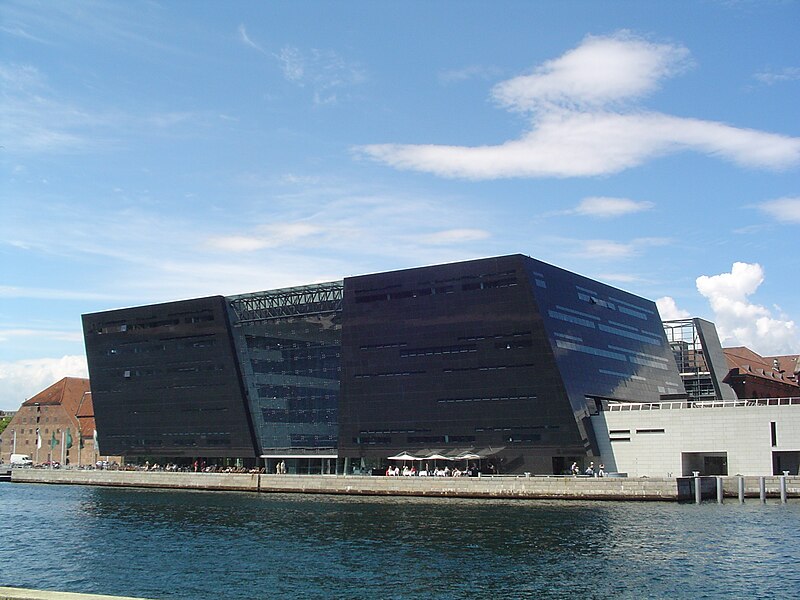
Known as the “Black Diamond”, the The Royal library is housed in a huge building made of black marble and glass.It is actually part of Copenhagen university and the building contains many other cultural activities such as music, theatre and a museum. For me it is a draw card to have so many cultural activities including a library in one building. Construction began in 1995 and finished in 1999. With 7 floors and 20,733 square metres, this neo modern building struck me as very solid, like a monolith when I first saw a picture of it, and it reminded me slightly of the National Gallery of Victoria in its timeless solidness.In the picture below, it almost seems to be floating on the river!


File:Den Sorte Diamant 1.jpg
Source: Wikicommons


However, being located on the edge of a river in the heart of Copenhagen, there is spectacular reflection of  light at different times of the day, as shown in this short video,


                                                   Copenhagen Library source : Youtube


Designed by Schmidt, Hammer and Lasen architects, this is one of their most well known buildings, although they have designed a large number of buildings and have a huge number of projects on now. One aspect that their work has in common is a 'democratic approach to an architecture which can accommodate modern, open and multifunctional meeting-places'. Even though I did extensive searches on Swinburne databases I could find very little information specifically about the library. There are quite a few journal articles on the architects, but not relating to the building.


File:Den Sorte Diamant 8.jpg
Source: Wikimedia Commons


Designed by Per Kirkeby, this Fresko (without a name), is a huge 210 square meters and is situated at the entrance to the lending library. Taking more than a year to complete, the internationally renowned artist is known for his colourful compositions and had an exhibition at the Tate modern gallery in London in 2009.


File:Den Sorte Diamant 10.jpg
Source: Wikimedia Commons


References:

E-architect, 'Sort Diamand, Copenhagen, Denmark : Information', viewed 8 June 2012, <http://www.e-architect.co.uk/copenhagen/sort_diamant_copenhagen.htm>.


Labalme, C 1999, 'Travel Advisory; A Diamond for Denmark's Library', the new york times, 17 October 1999, Academic Onefile, viewed 9 June 2012.


ArcSpace, 'schmidt hammer lassen K/S The Black Diamond The Royal Library Extension Copenhagen, Denmark', viewed 8 June 2012, <http:/www.arcspace.com/architects/schmidt_hammer_lassen/royal_lib/index.html>.

E-architect, 'Sort Diamand, Copenhagen, Denmark : Information', viewed 8 June 2012, <http://www.e-architect.co.uk/copenhagen/sort_diamant_copenhagen.htm.>.


Black Diamond 2012, Wikipedia, viewed 8 June 2012,<http://en.wikipedia.org/wiki/Black_Diamond_(library))>.

Royal Danish Library 2012,Wikipedia, viewed 8 June 2012, <http://www.tate.org.uk/whats-on/tate-modern/exhibition/kirkeby>.

Per Kireby 2012, Wikipedia viewed 8 June 2012, <http://en.wikipedia.org/wiki/Per_Kirkeby>.

Copenhagen Library...Sundappled 2011, viewed 8 June 2012,< http://www.youtube.com/watch?v=09lXl1Zxw74>.


Post 3 Seatle central libary

Seattle Central Library

Central Library
1000 Fourth Ave.
Seattle, WA 98104
206-386-4636


For my second library, I chose the Seatle central central library. Without having done much research into it, the pictures of it seemed interesting and it  had won architectural awards, was hailed as the "the most important new library to be built in a generation, and the most exhilirating". It became evident fairly quickly that you can read a lot about a place and see footage and pictures, but in the end one has to truly experience it in person to see what impact it has. I did find contradictory assessments of this library the more research I did, but from what I have seen, it is still a place I would like to visit.


Designed by the Dutch born, Harvard professor Rem Koolhaas and American born founder of  REX  Joshua Prince-Ramus, this open spaced library is full of light and has quickly become an icon in Seattle and tourist destination too, when it opened in 2004. An impressive 152 out of 167 people on trip advisor rated the library as "excellent" or "good" as a place to visit (when viewed in June 2012). A year after the library opened in 2004, it was visited by 2.3 million people and 30% of them were from out of town. At 11 levels and 56 metres high, the capacity to hold up to 1.4 million books and a huge area of over 32,000 square metres.


Part of the grand idea for the library was to create "living" spaces, inviting areas where people can relax as seen this photo.


Source: Jeffwilcox on Flickr


The library has a spiral stair case that goes for 4 floors and contains the entire dewey system. It can accomodate changing collection sizes. This amateur footage is a bit jerky, but shows someone going up the escalators from the ground floor and the collection can be seen.


                                                       Seattle Library source Youtube


There is a very informative TED talk given by Joshua Prince-Ramus on the reasons behind the design and what they wanted to achieve. Because the needs to change over how space is used, the library is built in compartments with some areas having more flexibitily than others. The librarians weren't convinced at first about the plans, but according to Prince-Ramus they were very happy with the result! The first 10 minutes of the talk is about the library and worth the time to listen to!


                                               Joshua Prince-Ramus source: TED talks                


Finally a photo of the outside or the "Skin" of the building. The building is an unusual shape and divided people. I think at first I would like it, but after a while I might find it a bit grating to look at. A little like some angles of Federation Sqaure in Melbourne.


File:Seattle Central Library, Seattle, Washington - 20060418.jpg
Source : Wikipedia


In fact, the layout of this building can actually be anxiety inducing according a study published in the journal "current directions in psychological science". After an extensive search on the swinburne library catalogue and journals, that was the only article I could find that directly addressed the psychological affects of the building on patrons.


Perhaps a more grounding object associated with the library is this fountain at the front of the library is by George Tsutakawa a seatle born sculptor who spent a lot of time in Japan. Placed at the front of the library, I thought it was an inspiring piece of sculpure,


picture by Mary Ann Sullivan


I have found the create commons site a good place to find usable pictures for this blog and the google search engine has yielded many useful results, although I have tried other search engines like exalead and dogpile and iseek. Google scholar has been very useful in finding journal articles, however university accessible databases like EBSCO has increased my searching scope.


References:

 Alessandroi A & De Cindi F 2008, 'Augmented Urban Spaces: Articulating the Physical and Electronic City' Ashgate Publishing, EBL Ebook Library, viewed 8 June 2012.


Seattle public library 2009, Seattle Public Library, 13 March, viewed 8 June 2012, <http://www.youtube.com/watch?v=Lp11MtnWmUo&feature=related>


Carlson LA, Hölscher C, Shipley TF and Dalton RC 2010, 'Getting Lost in Buildings', Current Directions in Psychological Science, vol. 19, no.5, pp. 284-289, SAGE premier, viewed 8 June 2012.

Seattle Central Library 2012, Wikipedia, viewed 8 June 2012, <http://en.wikipedia.org/wiki/Seattle_Central_Library>.

Rem Koolhaas 2012, Wikipedia, viewed 8 June 2012, <http://en.wikipedia.org/wiki/Rem_Koolhaas>.

Joshua Prince-Ramus 2012, Wikipedia, viewed 8 June 2012,<http://en.wikipedia.org/wiki/Joshua_Prince-Ramus>.


Rahner, M 2008, 'Talking with Rem Koolhaas, the architect behind the Central Library', The Seatle Times, 9 September 2008, viewed 8 June 2012, <http://seattletimes.nwsource.com/html/entertainment/2008167399_remkoolhaas09.html>


Sullivan, M 2011, 'George Tsutakawa Fountain at the Downtown Seattle Public Library', Councelor@law,v iewed 8 June 2012 <http://www.wac6.com/wac6/2011/06/george-tsutakawa-fountain-at-the-downtown-seattle-public-library.html>

Rex ny 2012,Wikipedia, viewed 8 June 2012, <http://www.rex-ny.com/work/seattle-library/>.


Post 2 - Musashino Art University Museum & Library

Musashino Art University Museum & Library


 Musashino Art University Museum and Library
1-736 Ogawa-machi, Kodaira, Tokyo 〒 187-8505


The first library I chose is the Musashino Art University Museum & Library, university campus located in Toyko, Japan. Built in 2010, it is the final renovation of the original 1962 building, which has been completely transformed by the vision of the Japanese award winning architect Sou Fujimoto.

It is essentially a building made up of bookshelves from the inside and the outside. A glass shell (0.3 inches thick) encasing wooden bookshelves 28 feet high. There are three storeys, and the first floor consists of a long, spiral shaped bookcase which is wrapped around the edege. It is an incredible design, and unfortunately I couldn't find any pictures to post that were not in copyright. But the layout of the bookshelves follow this similar pattern


Source: Penelope Else from FlickR


There is plenty of room downstair for people to sit and the books are all very accessible. At 69,000 square feet, the library can hold up to 300,000 books.

For some great pictures of the library, click on this link.

The upstairs also has large bookshelves the curve around the perimeter, where in the middle there is the reference desk and plenty of areas where people can sit. While there are computers and private study carols and meeting rooms, the dominant objects within the visual field are large bookshelves. Hence, the book is still the dominant feature of the library, compared to the computer.

This building is also very striking from the outside, and seeing a huge bookcase through class, that wraps around the outside, immediately identifies the building as a library. In fact, it can be seen all around the campus. The spiral shape draws one towards something, perhaps knowledge? imagination? ideas?

I found this great interview with Sou Fujimoto talking about what he was trying to achieve in his design and his thoughts on the library. Being a vimeo video, blogger didn't allow me to upload it here. But to view the video, simply click on this link  http://vimeo.com/21702196#t=12


Sou Fujimoto talks about designing a library in the age of information.He sees the starting point of architecture as beginning with the fact that people have a body and feelings, where as information has no physical space. So the challenge is to merge the feelings that one might experience for example when using the internet for example, with that of the physical environment. 

He also uses a “forest of books” concept. In using the analogy of a forest to describe how he sees architecture – the forest contains so many different elements, that one might be only aware of 10% of what is going on when one strolls through it. The animals and creatures that inhabit it all have their own perception of what is going on. Information technology, such as using the internet would be one component of this “forest’.
The use of light is very important and soft light shines down through translucent white polycarbonate.
There is a lot of timber in the library, which is reminiscent of trees in a forest. From the pictures and descriptions, I love the openness of the space, and the sense of continual growth and change invoked by the empty shelving. Having so much space for more books (even though much of it would never be used due to lack of accessibility and load-bearing ability) reminds one that there is always more knowledge, books and information to be created. The empty box like shaped shelving, are like books, in the sense that a book is a finite physical object that can be handled and categorized and understood . It is a manageable chunk of human reality. When looking around this library, these empty boxes open up a space for one to imagine something to fill the spaces. I read later in Tanaka's article that Fujitso himself said that they "hint at the infinite expansion of information into realms that transcend the medium of the book".  I think fostering a sense of imagination in a library is wonderful, and though knowledge is critically important, and libraries are a storehouse of knowledge, I am reminded of what Albert Einstein once said the imagination is more important than knowledge!

Sou Fujimoto also wanted to create a great spiral bookshelf which wraps around the outside of the library. I think it’s a brilliant concept which immediately identifies the building as a library. 

As I indicated, I couldn't post any pics due to copyright, but it is very easy to find some pictures of the library simply through Google images. However there were still surprisingly few pictures available through sites like Google, Flickr and nothing through the creative commons sites. There were only a few good articles through the Swinburne library databases and Google scholar. I also used iseek


Add to My Library


References:


Arch Daily 2011, Musashino Art University Museum & Library / Sou Fujimoto, Arch Daily, viewed 2 June 2012, http://www.archdaily.com/145789/musashino-art-university-museum-library-sou-fujimoto/

College of Art and Design 2012, Musashino University, viewed 2 June 2012, <http://mauml.musabi.ac.jp/>

Gregory, R 2010, '165 Musashino Art University Library. (Sou Fujimoto Architects)', The Architectural Review, vol. 228, no. 228, pp. 42, Gale Cengate, viewed 2 June 2012.

Pollock, N 2011, Musashino Art University Museum & Library, Architectural Record, viewed 2 June 2012, http://archrecord.construction.com/projects/building_types_study/libraries/2011/musashino.asp

Sou Fujimoto 2012, Architects, viewed 2 June 2012, <http://www.sou-fujimoto.net/>

Sou Fujimoto, on designing a library on the age of information 2012, Archdaily, viewed 2 June, <http://vimeo.com/21702196#t=12>

Tanaka, J 2010, Spiral of Life: The Musashino Art University Museum & Library Academia edu, viewed 2 June 2012, http://utokyo.academia.edu/JunTanaka/Papers/373615/Spiral_of_Life_The_Musashino_Art_University_Museum_and_Library

Spiral Fossil 2009, Penelope Else, viewed 11 June, 2012<http://www.flickr.com/photos/55922608@N00/3781109890/>

Musashino Art University Library by Sou Fujimoto Architects 2011, De Zeen magazine, viewed 11 June 2012, <http://www.dezeen.com/2011/05/12/musashino-art-university-libraryby-sou-fujimoto-architects/#more-127893>


Introduction

Six architectually inspiring libraries from the world!!!


"From early on I have suspected that the so important sounding task "know thyself" is a ruse of a cabal of priests. They are trying to seduce man [woman] from activity in the outside world, to distract him with the impossible demands; they seek to draw him into a false inner contemplation. Man only knows himself as he knows the world- the world which he only comes to know in himself and himself only in it"
                                                                                                                                         - Goethe


Given the current trend towards accessing information (including e-books) over the internet, among the reasons to visit a physical library is to locate oneself in a building (and perhaps in the spirit of Goethe, to be still connected to the "outside" world). This blog is about libraries as physical spaces that can inspire people to visit a library and provide an enjoyable and creative space in which one can read and access information. I have selected 5 libraries that currently exist in the world and hope to inspire people to visit them. The buildings were selected principally for their architecture and I also wanted to get a selection from different countries.  I sort inspiration from researching different libraries on the internet, looking at architecture websites, blogs and articles and selected five libraries that seemed appealing.
The five libraries I have selected are:

Musashino Art University Museum & Library

Seatle Library

Royal Danish Library

National Library of Belarus

Geisel Library

With each library, I intend to give a description of the building, find information on the architect and what they intended to achieve through their design, choose an interesting aspect of the building and elaborate on that, provide some thoughts about my own reaction to the building and perhaps add additional information that seems relevant.

Being based in Melbourne, unfortunately I won’t be able to visit any of the libraries and intend to do all research over the internet. Using resources through the Swinburne library, I will access journal articles and relevant books. I will also do basic internet searches using Google and Wikipedia and also hope to locate images through sites such as FLICR and google images. I also hope to find video footage through youtube or vimeo.